

Mary’s Virginity
Stories of gods born to virgins could be found in many countries thousands of years before Jesus. In Greek mythology, Danae was the virgin mother of the demigod Perseus. The Egyptians had Isis as the virgin mother of Horus, and she was worshipped throughout the Roman Empire in Jesus’ time. Mithras, whose cult outshone Christianity for popularity in the first three centuries, was conceived when God entered a virgin. Attis, Adonis, Buddha, Krishna, Osiris and Tammuz were all born to virgins. It appears that in ancient times to be a God of any significance your mother needed to be a virgin! The new God of the Christians was merely made to “follow suit” in order to create a God with godly characteristics.
Matthew portrayed Mary as a virgin, (see below) and Luke followed suit:
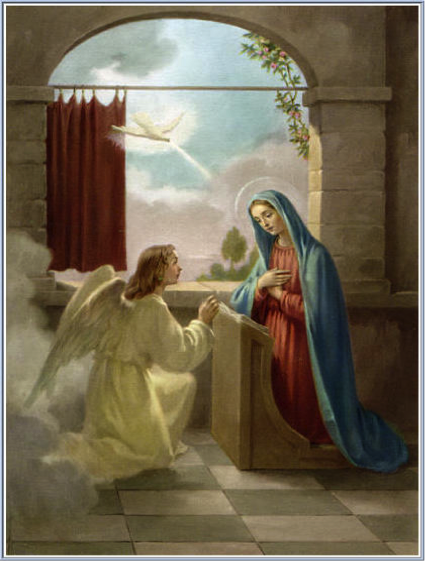
 “In the sixth month of Elizabeth’s pregnancy, God sent the angel Gabriel to Nazareth, a town in Galilee, to a virgin pledged to be married to a man named Joseph, a descendant of David. The virgin’s name was Mary. The angel went to her and said, “Greetings, you who are highly favoured! The Lord is with you.” Mary was greatly troubled at his words and wondered what kind of greeting this might be. But the angel said to her, “Do not be afraid, Mary; you have found favor with God. You will conceive and give birth to a son, and you are to call him Jesus. He will be great and will be called the Son of the Most High. The Lord God will give him the throne of his father David, and he will reign over Jacob’s descendants forever; his kingdom will never end.” “How will this be,” Mary asked the angel, “since I am a virgin?” The angel answered, “The Holy Spirit will come on you, and the power of the Most High will overshadow you. So the holy one to be born will be called the Son of God.” (Luke 1:26–35, KJV.)
The only witness to this encounter was Mary herself. It is impossible to imagine an elderly Mary, battle weary after bringing up a brood of seven, describing such a doubtful anecdote to the author of Luke.
Matthew, who, like Luke, had never met Mary, manufactured a virgin pregnancy prediction from Isaiah in the Old Testament:
“Now all this took place to fulfill the words spoken by the Lord through the prophet: ‘The virgin will conceive and give birth to a son and they shall call him Emmanuel…’” (Matt. 1:22, NJB.) However, the original Hebrew text from Isaiah reads,
“The maiden is with child and will soon give birth to a son whom she will call Immanuel” (Isa. 7:14, NJB.)
Isaiah was not referring to a pregnancy sometime in the future, but one that had already occurred. The maiden was not a virgin, as she was pregnant. Furthermore, Jesus’ name was not Immanuel. Matthew was improvising, and Luke followed suit. Many modern Bibles dishonestly translate Isaiah by using the word “virgin.”
 Mark, who wrote first, and John both failed to mention Mary’s virginity. If, for some reason, an elderly Mary had advertised the fact she was a virgin before giving birth to Jesus, and Mark and John were credulous enough to believe it, they would surely have documented this amazing fact.
Paul, Christianity’s mastermind, clearly stated that Christ
“…was born of the seed of David,” (Rom. 1:3, NJB) although this verse may have been an interpolation. The author thought Jesus had a human father, so he did not think Christ’s mother was a virgin either.
In 1987, Pope John Paul II wrote (in Redemptoris Mater) that the Holy Spirit entered Mary’s virginal womb.[1] Pope John Paul II proposed that a ghost’s sperm slipped into an adolescent girl’s vagina, penetrated her cervix, fertilized her ovum, and she never noticed. One wonders whether an intelligent man could genuinely believe such nonsense.
Many church people today are embarrassed by the silliness of Mary’s virginity story, yet the story is there, in their Bibles, a remnant from a superstitious, credulous time, and, for them, it must be difficult to ignore.
Mary’s Perpetual Virginity
The Catholic Church promotes the notion that Mary was a perpetual virgin; that she abstained from sex throughout her whole life! Jerome and Augustine proposed this inane idea in the fourth century, when virginity was associated with purity. Augustine wrote that Mary
“…remained a virgin in conceiving her Son, a virgin in giving birth to him, a virgin in carrying him, a virgin in nursing him at her breast, always a virgin” (St. Augustine, Serm. 186, 1: PL 38, 999.)
Thomas Aquinas (1225 – 1274) claimed that Mary gave birth painlessly without opening her womb and without injury to her hymen, (Summa Theologiae III.28.2, view at[2] but there was no IVF, anesthetics or caesarian sections in Mary’s, or Thomas’ day.
The King James Bible states:
“Then Joseph being raised from sleep did as the angel of the Lord had bidden him, and took unto him his wife: And knew her not till she had brought forth her firstborn son: and he called his name JESUS.” (Matt. 1:24-25, KJV.)
Numerous other Biblical translations also make it clear Joseph had sex with Mary after the birth[3]
A Catholic Bible, however, perhaps conveniently mistranslates the passage.
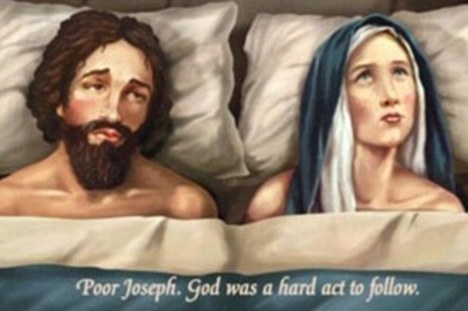 “He had not had intercourse with her when she gave birth to a son; and he named him Jesus,” (Matt. 1; 25, NJB) thereby deliberately avoiding mentioning the postnatal sex.
In 1996, Pope John Paul II reiterated, without a blink of his eye, that Mary remained a virgin throughout her life. [4] If he was not purposefully hiding the obvious truth, then he must not have understood the mechanics of reproduction. Either way, the pope had not read the Gospels carefully.
John Paul II was probably just restating tradition; which meant he was content to have his followers viewing Jesus and the holy family in a way that was very divorced from the reality of humanity.
Consider the newly married couple’s sexuality and culture. At that time, the primary duty of any Jewish bride was to fall pregnant so the man’s progeny was produced. A scenario in which a young Jewish bride tells her new husband sex was not on the menu because a yet-to-be-invented religion will one day venerate her as a virgin, is absurd.
According to the Bible, Mary’s womb was, in fact, quite prolific. The books of Mark, Matthew, Luke, John, Paul, and Acts each cite Jesus had siblings, despite there being no evangelical need to do so (the siblings add nothing to the tenets of Christianity.)
After Mary spent her best years bearing at least seven babies, she must have been quite worn out, and her uterus was obviously functioning as nature intended it to. There was no dearth of traffic through Mary’s birth canal from either direction.
Mary’s perpetual virginity is a product of the puritanical, prudish Catholic Church. If the Vatican (and other Christians who choose to believe in Mary’s perpetual maidenhood) hopes to be taken seriously in weightier matters, it might serve them best to stop pretending they believe such nonsense.
[1] http://www.vatican.va/holy_father/john_paul_ii/encyclicals/documents/hf_jp-ii_enc_25031987_redemptoris-mater_en.html
[2] http://www.ccel.org/a/aquinas/summa/TP.html
[3] http://www.biblegateway.com/passage/?search=Matthew%201:24-25&version=NIV
[4] http://www.cin.org/jp960828.html

u bitch u will be punished for this u bitch ass devils
You poor satanist bastards 🙁