

The Resurrection of Jesus is a Myth!
“If Christ has not been raised, you are still in your sins. And what is more serious, all who have died in Christ have perished. If our hope for Christ has been for this life only, we are the most unfortunate of all people.” (1 Cor. 15:17–19, NJB.)
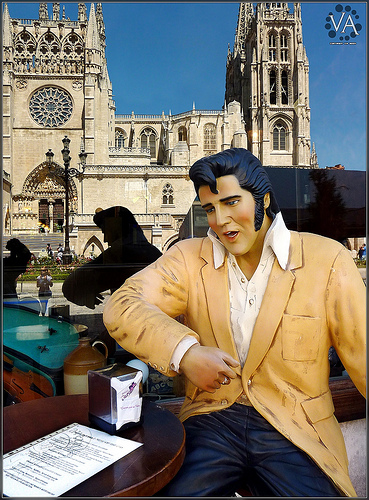
The Romans crucified Jesus. That did not look good. The Gospel authors could not have Jesus just disappear after such a dreadful demise. They had to spruce up the story, because no one idolizes a loser. Jesus had to come back, just like a god was expected to. The Egyptian Osiris, the Greek Dionysus, the Persian Mithras, and many others had all risen from the dead. Resurrection is a timeless theme; if a character was charismatic enough, people like to imagine he has defeated death, even today. Consider Elvis Presley.
Christ’s resurrection “proved” his divinity; it meant he was not another “also-ran.” The resurrection is the central tenet of the faith, the one most important belief upon which Christianity is based.
Mark’s Gospel, the first to be written, and the one that the others copied, should have made a big deal about this exceptional event. Yet Mark only devotes the second half of his last chapter to the resurrection, as if it was tacked on like an afterthought. He has only twenty or so lines describing what many people presume was the premiere event in the world’s history. (http://www.biblegateway.com/passage/?search=Mark+16).
There are a few more odd facts about these verses. Their character and style seems out of place. At 16:9 there’s an apparent end to the narrative flow and the style loses its descriptive quality. Mary Magdalene is spoken of as if she hadn’t been mentioned before. What’s more, the appearance of a risen Jesus is not documented in the two oldest Greek manuscripts, the oldest Latin manuscript, the oldest Syriac manuscript, from about one hundred early Armenian manuscripts, and the two oldest Georgian manuscripts (written 897 CE and 913 CE.) In many other early texts that include verses 9–20, asterisks mark the verses as doubtful or spurious. Moreover, Clement of Alexandria, Origen and Tertullian, early third century commentators, are unaware that a resurrected Jesus appeared in Mark. Eusebius and Jerome are, but they’re fourth century commentators, and they note that A risen Jesus never appears to anyone in their earlier Greek transcripts.
The original author of Mark failed to mention that Jesus visited his followers after he was crucified! That’s one seriously important omission!
Verses16:9–20 was added to the end of Mark by an unknown author, a fact admitted by most contemporary New Testament scholars. (http://en.wikipedia.org/wiki/Mark_16).
A footnote in the Jerusalem Bible states,
“The ‘long ending’ of Mark, vv.9–20, is included in the canonically accepted body of inspired scripture. This does not necessarily imply Markan authorship which, indeed, is open to question.”
 The Catholic Encyclopedia states,
“Catholics are not bound to hold these verses (16:9–20) were written by Saint Mark.”
The arrogant authors assume they can tell Catholics what to believe. They then make the following ridiculous claim as one of several possible explanations for the lack of a resurrection ending:
“If, then, Mark concluded with verse 8, it must have been because he died or was interrupted before he could write more.”
Imagine Mark sitting at his desk, pen poised, just about to create history by writing the final twenty lines of his epic when—oops—he dies! A trail of ink meanders off the page, and none of his readers were to find out who saw the risen Jesus until about 200 years later.
The encyclopedia continues:
“Whoever wrote the verses, they are inspired, and must be received as such by every Catholic.”
They are ordering their readers what to believe! To resort to special pleading demonstrates the weakness of their argument.
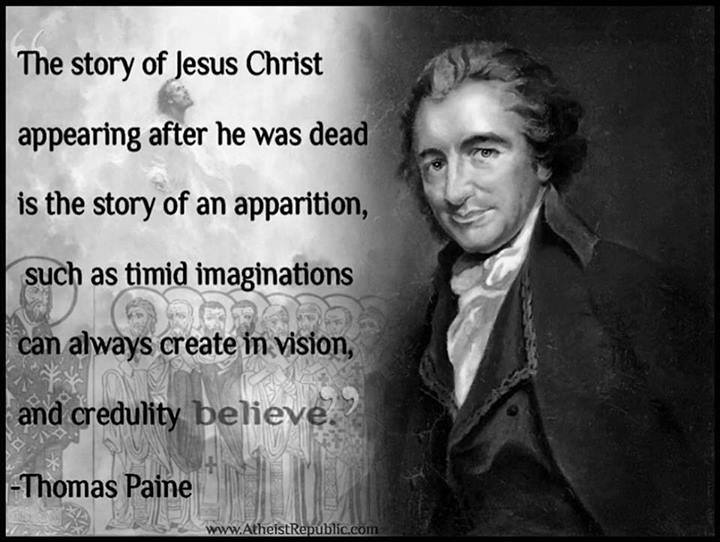
If Jesus’ original biographer failed to mention who he reappeared to and when, then obviously there was no resurrection. The fact that someone (probably in the early third century) could just add an ending to a Gospel, and (almost) get away with it, seriously undermines all the Gospel stories. Any obvious flaws in the texts could be just as easily doctored, just as happened here, and subsequent readers would be no wiser. Imagine the tailoring of sayings and events that went on when the original version of Mark was first put together.
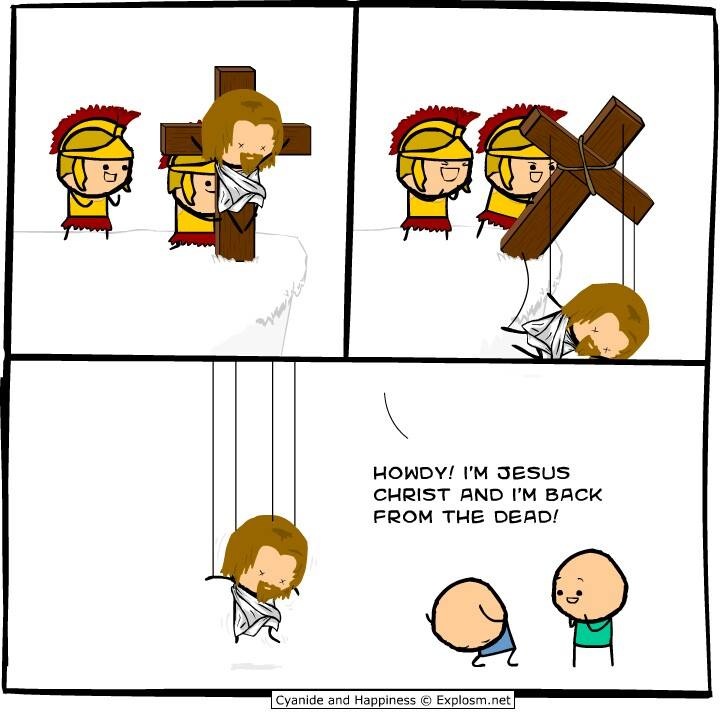
Apologists, embarrassed by the obvious truth, often go to great lengths with wordy spiels about why they think the ending is authentic.
Most Church leaders who know about the interpolated ending do not advertise it. They do not want to compromise the faith of their flock, and that’s fraudulent.
The authors of the other Gospels included resurrection appearances.
They each gave different reports of events after the death of Jesus, because they did not have this part of Mark’s chronicle to copy, so each made up their own. Luke and John have the risen Jesus appearing in Jerusalem, far more prestigious than Galilee, which was believed to be a backward bad land, yet was where Mark suggests he will be hanging out. (see 16;7.) There are numerous other inconsistencies. Christian apologists have tried to reconcile the four very different resurrection reports, with no success.
Matthew adds an earthquake and the corpses of holy men walking around Jerusalem.
“And, behold, the veil of the temple was rent in twain from the top to the bottom; and the earth did quake, and the rocks rent; and the graves were opened; and many bodies of the saints which slept arose, and came out of the graves after his resurrection, and went into the holy city, and appeared unto many.” (Matthew 26;51-53, KJV.)
 Jesus was not the only Jew to rise from the dead! I wonder whether these walking corpses helped remove the rubble from the earthquake? Did they rejoin their relatives around the table? It might have been disturbing divvying up dinner to your dead half decayed dad!
The Catholic Encyclopedia writes this about the Gospels:
“First of all, they commended themselves by their tone of simplicity and truthfulness, which stood in striking contrast with the trivial, absurd, or manifestly legendary character of many of those uncanonical productions.”
I think they are reading their canonical accounts with rose-colored glasses.
There is no guarantee that the first versions of Matthew, Luke and John, perhaps originally written in the late first century, contained resurrection accounts either. Their versions of the event could just as easily have been added in to the writing some time in the second century, possibly after Marcion propagated Paul’s (who wrote about a risen Christ) writings in Rome in the 140’s. If this is so, none of the four original Gospels had Jesus rising from the dead; the whole resurrection idea was added to their Gospels after Paul’s theology became too popular to be ignored.
Bishop John Shelby Spong has good reason to be concerned about resurrection stories:
“If the resurrection of Jesus cannot be believed except by assenting to the fantastic descriptions included in the Gospels, then Christianity is doomed. For that view of the resurrection is not believable, and if that is all there is, then Christianity, which depends upon the truth and authenticity of Jesus’ resurrection, also is not believable.”
Jesus did have brothers, two of who, James and Jude, have probably written their own letters that ended up in the Bible. If one’s brother had risen from the dead, one would be elated and awestruck, but neither even mentions the fact.
Paul believed in a resurrection, but this is how he got to know his risen Christ:
“Then God, who had specially chosen me while I was still in my mother’s womb, called me through his grace and chose to reveal his Son in me” (Gal. 1:15–16, NJB.)
He was writing at least twenty years after Jesus died, and gave no description of God’s son. His experience was not a physical reappearance of a dead Jesus, but one that emerged from his own imagination that he thought was inspired by God.
Paul may have written that over 500 people witnessed the risen Jesus:
“Moreover, brethren, I declare unto you the gospel which I preached unto you, which also ye have received, and wherein ye stand; by which also ye are saved, if ye keep in memory what I preached unto you, unless ye have believed in vain. For I delivered unto you first of all that which I also received, how that Christ died for our sins according to the scriptures; and that he was buried, and that he rose again the third day according to the scriptures: and that he was seen of Cephas, then of the twelve: after that, he was seen of above five hundred brethren at once; of whom the greater part remain unto this present, but some are fallen asleep. After that, he was seen of James; then of all the apostles. And last of all he was seen of me also, as of one born out of due time.” (1 Corinthians 15; 3-8, KJV)
This is not evidence that 500 people witnessed a resurrection, as some evangelists claim, but only evidence that one person (Paul, or an interpolator) claimed 500 people saw a risen Jesus. Paul was a man obsessed with convincing people to join his communities, and maybe truth could be sacrificed if it helped build up the numbers.
There is no first-century secular writer who mentioned Jesus, let alone a risen Jesus. If a resurrected Jesus had appeared to as many people as claimed, contemporary historians would have shouted it from the rooftops, yet there is not a word about it.
There are many reasons why millions of people today are convinced Jesus rose from the dead. Some mistakenly think eye-witnesses wrote the Gospels, and that they are factual biographies. Some commentators dissect the four accounts of the resurrection to try to reconcile them with each other (unsuccessfully,) as if that proved they were true.
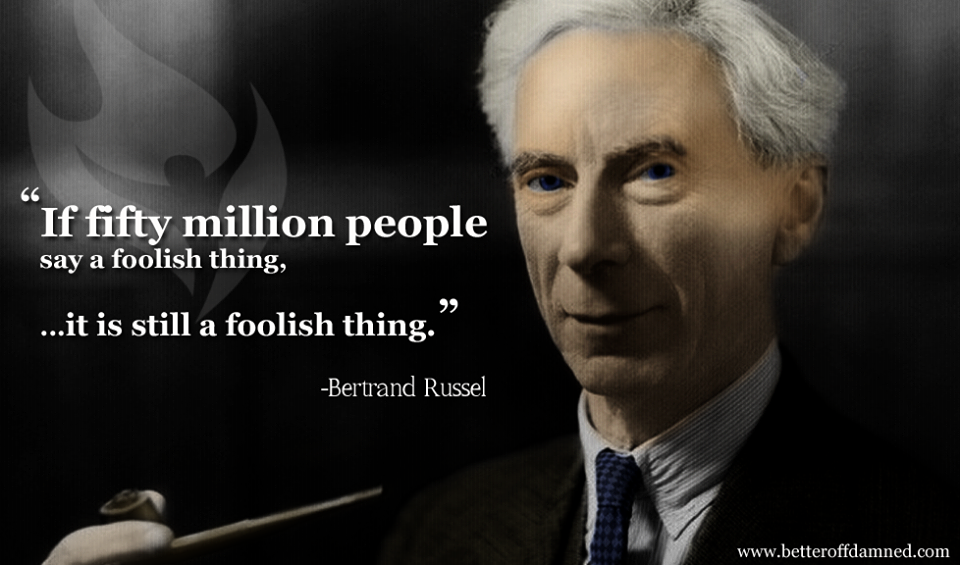
 Yet there are no reliable facts to prove the extraordinary claim that Jesus, or anyone else, rose from the dead. If a tale is told often enough, it takes on a life of its own, as can happen if a lot of other people believe too (argumentum ad numerum,) and that is what has happened here.
The truth is the believers have been duped.
(http://www.youtube.com/watch?v=k6PWFvzKl3I).