

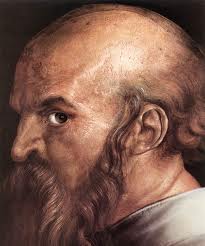
The Apostle Paul – a nasty, complex character
“That Saint Paul…He’s the one who makes all the trouble.”
(Ernest Hemingway, http://www.kirjasto.sci.fi/hemingwa.htm)
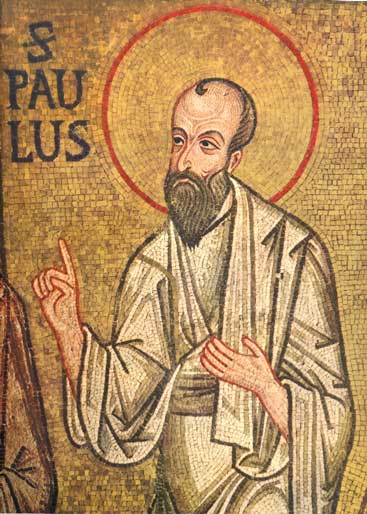 Paul was the creator of Christian theology.
I feel no warmth for him, nor do I like his messages.
He had an incessant self-righteous manner. His ideas were irritatingly convoluted and his ethics depraved. He deliberately distorted the Nazarenes’ (including the family and disciples of Jesus) beliefs with his own. He was a man intent on manipulating people and shoring up his own status, and all this is very unattractive.
It is easy to be critical of historical characters if we don’t understand their world from their perspective, so I tried to do so. I spent many months reading his letters, and books and articles about him, expecting to find some redeeming features, but there are very few to be found.
To put Paul’s Christology in perspective, we should consider his almost complete lack of credentials. His legitimacy rested solely on his claim that God had revealed everything to him, an extremely weak argument. Christian history is littered with charismatic cult leaders who have thought or pretended that God talked to them. They have usually spent their youth studying scripture, started their own sect, and then tried to control everyone in it, which is precisely what Paul attempted. Joseph Smith and David Koresh are typical examples. It turned out Paul’s writings helped create the biggest cult of them all.
 Paul’s “good news” defines today’s Christianity, yet it was contrived to be attractive and easy to sell. He claimed Christ was the Son of God crucified by the Jews as a sacrifice to make up for humanity’s sins, and it was imperative to have faith in this scheme to get into heaven.
These rather bizarre and innovative ideas were unknown to John the Baptist and Yeshua (Jesus,) and repugnant to James, Peter, the other disciples, and the entire Jewish nation. Paul met James and Peter, but thought they had
“nothing to add to the good news I preach.” They were messianic Jews who Paul knew opposed Roman rule, so he berated their beliefs and promoted his own.
Paul was cunning, opportunistic, and manipulative, and cleverly tailored all his innovative arguments to suit whichever community he was writing to. He invented long-winded waffling tales about his own credibility, God, heaven, Christ, Jews, and Gentiles, and they do not make sense.
 Paul knew nothing of a Jesus born to a virgin, the preacher who could cater for a crowd with a few loaves and fishes, command graves to open, cast out devils, walk on water, or cure leprosy. He never met Jesus, or described him. The “road to Damascus” story was invented by the author of Acts. Paul teaches us more about Jesus by what he does not say than what he does. He indirectly proved that the Gospels are mainly mythical.
My theory is that Paul’s Christ figure was someone else who has since been retrofitted into the Gospel stories about Jesus, probably sometime in the second century. I suspect the name “Jesus” has been inserted into Paul’s original writings, as have the few passages that suggest Christ was once a living person. I think this “cut and paste job” is obvious once one has been made aware of it.
There was no such thing as a New Testament in Paul’s time, so he could not possibly have presumed his own writings were scripture.
Paul was overtly misogynistic, homophobic, and had a neurotic loathing of sexuality. He thought he was an authority on the afterlife, work place relations, the status of women, what to wear, when to eat, when to have sex, whom to keep company with, the role of government…and the list goes on. Today’s preachers promote these pathetic prejudices to justify their own.
 Paul was a product of the gentile world, and was probably a government propagandist employed to undermine and report on problematic Jews. He took his job very seriously. He became so obsessed with promoting propaganda he probably started to believe his own spiel. His job gave him power, prestige, and a platform to preach his bigoted ethics, and that was attractive to a man who was a social misfit. He was too obsessive about his own opinions. If he had lived in modern times, he’d be given a gold watch for his time in the public service, put on a pension, ushered out the door, and the whole office would be glad to see his back.
His writings became important when they were promoted by some second century Christians. They had to jettison the archaic Judaic law to be popular with Gentiles, and Paul’s ideas justified just that. This was why the author of the book of Acts invented stories about him to bolster his legitimacy.
This imaginative raconteur became the most influential theologian of all. Christianity became Paul’s baby, although dad did not know what a monster his progeny would grow in to.
I think his letters just happened to grab the imagination of the market, a most unfortunate quirk of history. His awful prejudices and bizarre theology, still read in churches, will continue to poison humanitarian ethics if they are not recognized for what they are.
How he did it…Paul the Salesman
I think Paul was a salesman with an ambitious agenda. He hoped to sell his interpretation of Judaism to the Roman world. I think he had a plan to undermine those dangerous messianic Nazarene beliefs that roused rebellion against Roman rule.
He wrote to various groups scattered throughout the Empire, and desperately insisted they believe only his theology. He was so obsessed with snaring converts that little else in his life mattered. In Romans 15:16, he wrote that Gentiles were an offering he would bring to God.
“That I should be the minister of Jesus Christ to the Gentiles, ministering the gospel of God, that the offering up of the Gentiles might be acceptable, being sanctified by the Holy Ghost.”
Most of the people he wrote to were Gentiles (pagans) associated with Jewish synagogues, (“God-fearing Gentiles,”) although he wrote to some Jews in the diaspora too. From Paul’s perspective, his patrons were in desperate need of direction and an authoritative, charismatic leader to look up to. He considered himself just the man. He knew how to win the hearts, minds, and souls of people, as he imagined himself as one of the few god fearers (i.e. Jews) who understood Gentile cultures.
Paul’s theology probably had a long and carefully thought out gestation. He knew that to appeal to his customers he needed a product very different to traditional Judaism, because Judaism required obedience to cumbersome dictates. The Jews believed one had to be circumcised, a painful and embarrassing procedure, not easy to sell to an adult man. The Jews worshipped Yahweh, who is portrayed in Jewish scripture as a thunderous and violent pro-Jewish anti-gentile God. The Jews could only eat kosher food, marry only fellow Jews, and had to stop work on the Sabbath. Jewish heritage and history were regarded as superior, and all Jews were expected to take part in the fasts and feasts celebrating the ancient epic of Israel. Many Jews thought they were one day going to be the masters of the world. Their messianic dreams were an obstacle to the peace Rome imposed on the people of the empire. Paul knew that gentiles found all this inconvenient, irksome and out of touch with reality, so he labeled these Jewish rules and beliefs as a type of “slavery.” Paul had to jettison the old rules, so he did, by reinventing Judaism so that it was more to the Gentile world’s liking.
According to Paul, there was now no need for circumcision or to stop work on the Sabbath. The dietary kosher rules were out; bacon was back on the breakfast menu. He downplayed the importance of the Jewish Temple, and replaced the Jews’ hope for a political messiah of their own with Christ, the spiritual savior of all mankind. The “kingdom of God,” according to Paul, became a place in heaven, not in Israel. He declared Yahweh was such a decent deity he had sent his own precious son, the Christ, to earth. He alleged gentiles were descendants of Abraham too, and that the centuries-old Jewish Law was a “curse,” and a type of “slavery.” All that was now required was faith in his claims about Christ. Voilà! The Christ myth and Christian theology were born.
 Paul was one of history’s first examples of an ambitious cult leader who, when the rules of the established religion were no longer convenient, simply invented new ones to suit himself. He replaced what he called the “old covenant” of the Jews with his entirely fabricated “new covenant.” He was trying to reinvent Judaism and I think doing his best to dampen down Jewish messianic dreams. He was bending over backwards to infiltrate Judaism with Gentiles and Gentile ideas. He had no idea he was creating an almost entirely new religion, yet that is precisely what his writings helped do many years later.
To help realize this remodeling of belief, he undermined Yeshua’s family and disciples behind their backs. He was surprised and angry to find himself competing with them for people’s allegiance. They were treading on what he considered his turf. How dare they preach old-fashioned Jewish theology and disrupt his mission to set up communities of believers! Those annoying war-mongering Jews were full of subversive fantasies about a messiah, but God had revealed to him the real Christ, the up-to-date modern Christ! He, not them, was plugging the “good news.” He knew what the newly flexible, expansionist, less violent, less Judaic God expected in these modern, pro-Roman times. He was an educated, savvy, Greek-speaking sophisticate who knew a stack more about selling religion to the subjects of the Empire than the old fashioned anti-Roman bumpkins from the backwater of Galilee!

Paul and Judaism
Devout Jews despised Paul and rejected his messages. The idea that their mysterious, perfect, one and only God could be incarnated in the form of Christ enraged them. They refused to believe that their God could die, or that a Christ’s death somehow addressed a primordial, sinful nature of humankind. Their Messiah was never expected to be the savior of an individual’s soul, but of their entire people. The kingdom of God promised in scripture was not in heaven, but was to be on earth in the here and now. Their prophets had foretold that the messiah was to herald in a glorious age in which Israel ruled and brought the pagan empires of the world to the realization of the glory of their god, Yahweh. The messiah was to build the Third Temple (Ezek. 37:26–28), gather all Jews back to the Land of Israel (Isa. 43:5–6), and bring an end to the rule of the Romans. He was supposed to stop all exploitation, corruption, famine, disease, and war. Paul’s fictional Christ had done none of this!
 Paul claimed:
“Knowing that a man is not justified by the works of the law, but by the faith of Jesus Christ, even we have believed in Jesus Christ, that we might be justified by the faith of Christ, and not by the works of the law: for by the works of the law shall no flesh be justified” (Gal. 2;16, KJV,) and
“Christ hath redeemed us from the curse of the law” (Gal. 3:13, KJV,) and
“Before faith came, we were allowed no freedom by the Law; we were being looked after till faith was revealed. The law was to be our guardian until the Christ came and we could be justified by faith. Now that that time has come we are no longer under that guardian, and you are, all of you, sons of God through faith in Christ Jesus. All baptized in Christ, you have all clothed yourself in Christ, and there are no more distinctions between Jew and Greek, slave and free, male and female, but all of you are one in Christ Jesus.” (Gal. 3:23–28, NJB.)
But Jews would have none of this. They believed – and still do – that the way to find favor with God was to obey “the Law”—that is, the Torah, as allegedly taught by Moses. They knew that there was no mention in the Scriptures of there ever being an end to the covenant God made with their ancestors on Mount Sinai. Jews regarded the Law as a gift from their God. They did not consider it a curse or an imposition.
Why would they give up centuries of tradition to believe someone they regarded as a deluded, opinionated, self-righteous, pro-Roman renegade? They knew there was no such thing as a “new covenant,” other than in Paul’s fertile imagination.
Imagine a scientologist grabbing the microphone during mass at the Vatican and proclaiming that Ron Hubbard was the messiah. Paul was behaving like this hypothetical scientologist.
Jesus, who had died over a decade before Paul appeared on the scene, would have totally rejected the idea that his own death somehow gave believing Gentiles a ticket to heaven. He would have cursed Gentiles (who did, after all, nail him to a cross) with his dying breaths, never imagining that his God – whom he never thought of as his temporal sire – would grant them a place in heaven!
Jesus said,
“Do not imagine that I have come to abolish the Law or the Prophets. I have come not to abolish them but complete them. I tell you solemnly, till heaven and earth disappear, not one dot, not one little stroke, shall disappear from the Law until its purpose is achieved” (Matt. 5:17–18 JB.) Paul and Jesus contradicted each other! So much for Biblical infallibility!
Many Christians today still insist that Jesus came to do away with the Jewish Law. They are not listening to Jesus, but Paul (or his strong proponents such as Luther or Calvin.)
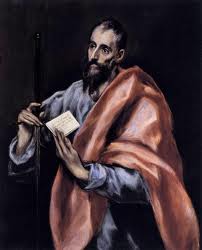 All Jews believed God dwelt in the temple. Paul made a cavalier dismissal of the importance of the Jewish land (Israel) by suggesting that the Temple was not the only place god resided. He wrote that all believers become a temple for God:
“And that is what we are—the temple of the living God” (2 Cor. 6:15, NJB) and
“Didn’t you realize that you were God’s Temple” (1 Cor. 3:16 JB.) Paul was attempting to expand God’s influence out of Israel and into the whole Roman world. Yet for any first century Jew this diminished the importance of the temple and denied the geographical pivot of Judaism.
Jews had always thought they alone were Abraham’s descendants and, therefore, a nation of God’s special people. Yet Paul claimed:
“Those therefore who rely on faith receive the same blessing as Abraham, the man of faith.” (Gal. 3:9, NJB,) and
“Merely by belonging to Christ you are the posterity of Abraham, the heirs he was promised” (Gal. 3:29, NJB.) He was asserting that believing Gentiles should consider themselves God’s chosen. He was trying to weaken the patriotic fervor of Jews by downplaying their exclusivity.
Throughout Paul’s travels, he was initially welcome in the synagogues because he masqueraded as a traditional Jew, but after Jews heard what he had to say, he was rejected, sometimes even beaten and pelted with rocks. As Paul was probably a Jew, they imagined he was upsetting their relationship with God and that the whole Jewish community would suffer as a consequence. Is it any wonder they physically attacked him?
While Paul was preaching, the Nazarenes, the original disciples of Jesus, were expanding into a significant force under the leadership of James (Jesus’ brother) in Jerusalem. They also enjoyed a significant membership among Jews throughout the empire. They definitely did not preach the divinity of Christ, nor intend to start a new religion. Paul considered them competitors. He got very upset when he encountered rival missionaries, who were probably Nazarenes, and complained bitterly about them hijacking “his” converts. He cursed them, using the undeniable truth of his own gospel as justification:
“I am astonished at the promptness with which you have turned away from the one who called you and have decided to follow a different version of the Good News. Not that there can be more than one Good News; it is merely that some trouble makers among you want to change the Good News of Christ; and let me warn you that if anyone preaches a version of the Good News different from the one that we have already preached to you, whether it be ourselves or an angel from heaven, he is condemned” (Gal. 1:6–9, NJB.) He sounds like an upset child whose best friend has gone off to play with someone else. It is ironic that the pathetic Paul was accusing his adversaries of the very thing he was guilty of – preaching a fabrication!
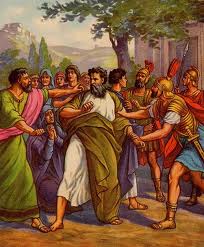
Paul’s Arrest
The two faced Paul tried to ingratiate himself with the Nazarenes when in their company, but they became implacably opposed to him, as verified by the verbal slanging match in Paul’s letter and the adamantly anti-Pauline assertions in James’ letter. James summoned Paul to Jerusalem when it became apparent Paul was preaching against the Torah, and sent him to the temple to purify himself and prove he was still a true Jew (see Acts 21,) which led to Paul’s so called arrest and eventual transportation to Rome. James, the brother of Yeshua, (Jesus) effectively terminated Paul’s missionary career!
When Paul was forced to reveal the fact he was a Roman citizen, his cover was well and truly blown. A Roman citizen couldn’t be a Nazarene. According to the book of Acts, the Romans had to dedicate considerable resources (500 soldiers) to protect him from angry Jews. They would have only done that when looking after one of their own.
Paul was not deterred by this interruption. He kept writing letters from Rome, and to the best of our knowledge, never gave up.
Paul’s modern-day reputation as a teacher of truth, along with the implication he taught Jesus’ message, has no truthful foundation, yet it has become part of Christian tradition, largely because of what the author(s) wrote in Acts. By then, sometime around the middle to late second century, Paul’s reputation needed more credibility, so the author had Jesus’ ghost appear to Paul on the road to Damascus, which was pure fiction. The story of Paul becoming good friends with Yeshua’s disciples was also a fiction. The author even took it upon himself to shore up Paul’s credibility by having him perform a number of miracles. Yet Paul failed to mention these miracles, an impossible omission if they were factual. Paul revealed many facets of his personality in his letters, but genuine modesty definitely wasn’t one of them.
 Sin
Sin
Why would anyone agree with Paul’s delusions about sin? Most people today consider sin a deliberate act that results in harm, usually to another person. Yet Paul claimed sin can be something one’s born with, like a birth defect. (http://atheism.about.com/od/thebible/a/originalsin.htm). This is a dim-witted idea, as a newborn can’t deliberately cause harm, so cannot sin.
Paul is the only New Testament author to discuss this concept of “original sin,” as further articulated by Tertullian of Carthage (AD 150-225) and Augustine of Hippo (354–430 CE.) It is a nasty notion. People are told they are basically bad – because they were born. It makes them dislike themselves, which churches know is good for business.

If, for the sake of argument, we (modern, rational people) accept the assumption that our behavior can offend God, surely this God did not need Jesus’ death to forgive. He could be benevolent and simply say
“you’re genuinely sorry, so I forgive you.” Paul, however, did not believe in a benevolent God, but thought of him as a rigid character who demanded a sacrifice.
I think Paul misunderstood the real problem with sin. The true sting of sin is that it harms our fellow humans, or sometimes the perpetrator himself, not God. It should be the victim who does the forgiving, because he or she is vindicated, maybe compensated, and the guilty party usually promises not to repeat the offense. Wrong-doers learn from their mistakes, and society benefits. Paul bypassed this reparative process by professing that sin was forgiven by having faith in Christ, an unrelated third party. In Paul’s scheme the perpetrator may not be genuinely repentant, so a repeat offense is very likely. What is more, the victim is uncompensated.

To pass on the responsibility of dealing with sin by having faith in Jesus is, in fact, a badly deficient way of sorting out social problems. (http://www.youtube.com/watch?v=HA55jGyq2C8).

In turning Christ’s death into a sacrifice that saves souls, Paul sacrificed common sense. He promoted a belief that degrades interpersonal relationships and compromises social harmony.


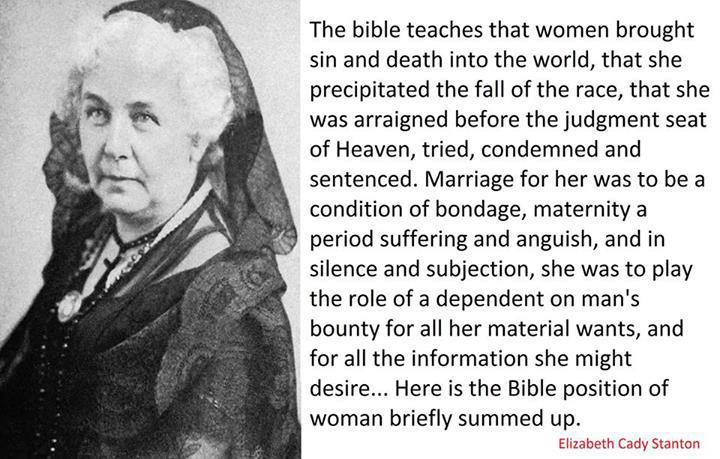
Paul the Misogynist
Paul was blatantly sexist. He, or someone writing in his name, wrote:
“For the man is not of the woman: but the woman of the man. Neither was the man created for the woman; but the woman for the man.” (1 Corinthians 11:8–9 KJV.)
“Wives, submit yourselves unto your own husbands, as it is fit in the Lord.” (Colossians 3:18 KJV.)
“Wives should regard their husbands as they regard the Lord, since as Christ is head of the Church and saves the whole body, so is a husband the head of his wife; and as the Church submits to Christ, so should wives to their husbands, in everything” (Eph. 5:22–25, NJB.)
If anyone is feeling their blood boil, be warned: it gets worse.
“Let your women keep silence in the churches: for it is not permitted unto them to speak; but they are commanded to be under obedience as also saith the law. And if they will learn anything, let them ask their husbands at home: for it is a shame for women to speak in the church.” (1 Corinthians 14:34-5, KJV.)

“Similarly, I direct that women are to wear suitable clothes and to be dressed quietly and modestly, without braided hair or gold and jewelry or expensive clothes; their adornment is to do the sort of good works that are proper for women who profess to be religious. During instruction, a woman should be quiet and respectful. I am not giving permission for a woman to teach or to tell a man what to do. A woman ought not to speak, because Adam was formed first and Eve afterwards, and it was not Adam who was led astray but the woman who was led astray and fell into sin. Nevertheless, she will be saved by childbearing, provided she lives a modest life and is constant in faith and love and holiness” (1 Tim. 2:9–15, NJB.)
This is what the founder of Christianity (and those who wrote in his name) thought of women. They were made to be playthings for men, submit to them, and remain silent unless spoken to, because their opinions were not important. They were inherently evil and had led men into sin. They were not to make themselves look attractive. The best way women could save their wicked selves from going to hell was to shut up, accept their second-class status and bear their husband’s children!

Some commentators go to great lengths to make excuses for Paul, yet it is irrelevant what he wrote elsewhere, or what other Pharisees thought of women, or that he had female friends. He clearly disliked assertive women and feminine sensuality, thought women were intellectually inferior to men, and that they were their husband’s property. His writings are read out in Churches today. Young boys and girls hear them, and that is unacceptable.
Most people today quite rightly ignore the misogynistic Paul, yet still think God inspired his theology. That makes no sense.
One of the reasons churches have been so successful over the centuries is that they degrade and hold back women; half their congregation! Churches have traditionally refused women leadership, encouraged pregnancy and discouraged them from entering the workforce or getting an education. There’s more to this than Paul’s prattle.
When women become educated, or bread winners, the whole family is empowered. Statistically speaking, the more educated and affluent people become, the less likely they are to go to church (at least outside the United States.) The empowerment of women throughout much of Europe over the last fifty years has meant a marked rise in standards of living and a sharp fall in church attendance. (http://www.youtube.com/watch?v=7oYkMrVrE8Q). That is not good for their business, and church bean counters know it, which is why I think feminism is usually frowned upon in church.


.


Wow. What a sad, sad website. You are a bitter, sad, angry, heartless, cruel and soulless person to find humor in your blasphemy and attacking a religion and its followers just because you dont agree with it. This is beyond pathetic.
You don’t understand what you are reading….if you read it.