

Jesus didn’t do Miracles

“Is it more probable that nature should go out of her course, or that a man should tell a lie? We have never seen, in our time, nature go out of her course; but we have good reason to believe that millions of lies have been told in the same time; it is, therefore, at least millions to one, that the reporter of a miracle tells a lie.”
(Thomas Paine, The Age of Reason, 1794)
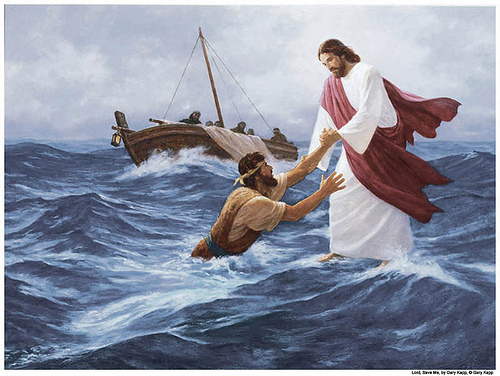
Cults that had existed for hundreds or thousands of years before Jesus all had miracle performing prodigies. Isis, an Egyptian goddess, healed the sick. Poseidon, the Greek god of the sea, walked on water, as did Horus, an Egyptian deity. Dionysus, the Greek god of the grape harvest, turned water into wine. Aesclepius, the Greek god of medicine and healing, raised the dead. Buddha fed five hundred men with one loaf of bread, cured lepers, and helped the blind to see. Most of Jesus’ miracles were rather “old hat” by the time the Gospel authors wrote about them. It could be claimed it was just coincidence that Jesus shared similar miracles with these others, but what is more likely is that the Gospel’s authors mimicked these other Gods to raise Jesus’ status.
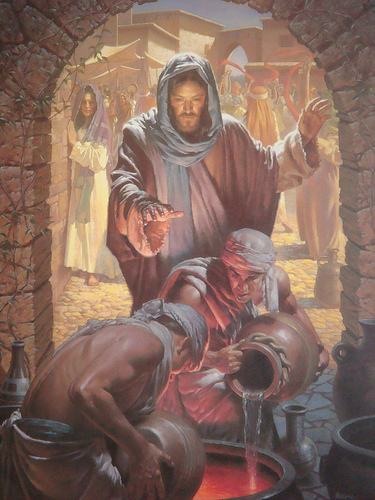
The Old Testament books contained stories of hundreds of miracles. Jesus, portrayed as the next prophet of Israel, was made to work miracles, just like Moses, Elijah and others.
If Jesus was really God, surely he should have pulled off some pioneering pranks by doing something new – maybe conducted a concerto, turned on a television with a remote control, or water – skied on the Sea of Galilee. If Jesus had cured the world of smallpox, leprosy, or cancer, he would have made a very convincing case for his divinity. Modern readers are left disappointed, as Jesus only repeated what could rightly be considered as run of the mill stunts, and there were no lasting benefits from his performances.
 The Gospels relate tales of cures, exorcisms, and risings from the dead. Those with paraplegia, leprosy, insanity, cerebral palsy, blindness, or had just given up breathing, were fixed in a flash. If Jesus had done all this, the Jewish social security system would have saved a stack of shekels, and Jesus would have been seriously popular. Consider how today’s faith healers can attract crowds of thousands with only the hope of heaven’s help,[1] whereas Jesus, if the stories are true, did much better than them – Jesus supposedly repeatedly wowed many different audiences with numerous party tricks.
If Jesus really did miracles, news of him would have spread like wildfire. There would have been no doubt he was divine, someone special, much more than just a preacher pushing parables. Everyone would have held Jesus in high esteem, and there would have been no squabbles with Romans, Sadducees, or Pharisees. Jesus would not have been crucified as a zealot.
The fact Jesus was executed means he was a trouble causer, not a superstar, so he did not do miracles.
Paul, who prob ably met the original disciples over a decade after Jesus died, did not document that Christ performed a single miracle. Paul’s writings predated the Gospels, so Paul had no idea Jesus was a wonder worker.
A scrutiny of all the other first-century epistles in the Bible – James, Jude, 1 and 2 Peter, and 1, 2, and 3 John – reveals no mention of miracles. Believers who had not read the Gospels wrote these epistles. The only place miracles are mentioned is in the Gospels, and they copied each other’s miracle stories.
Evangelical Gospel authors invented Jesus’ miracles, a fact easily deduced from an objective appraisal of the Bible! [2] [3]
In the first four centuries CE, miracle stories gave Jesus an immediate status, although that relied on one essential factor – the credulity of the believer.

[1] http://www.youtube.com/watch?v=BchBmA5Dukw
[2] http://www.youtube.com/watch?v=g6e17TflrHY
[3] http://www.youtube.com/watch?v=umRRCkspaQU
[4] http://www.jewishvirtuallibrary.org/jsource/biography/hillel.html
