

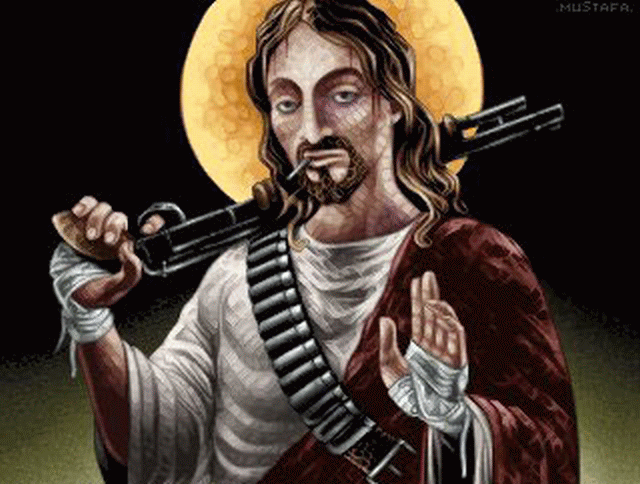
Who was Jesus Christ?
“The importance of apprehending the beginnings of Christianity as wholly Jewish cannot be exaggerated. Only to the extent that we are able to do this by priming ourselves with information about Jewish life, thought and faith at the time do we become capable of understanding Jesus and the original character of Christianity”
(Dr Hugh J. Schonfield, http://en.wikipedia.org/wiki/Hugh_J._Schonfield).
Jesus, if he ever existed, was someone quite different from the character in the Gospels. Rather than accepting the conventional Christian account, we should pay him the respect of acknowledging his humanity, family, society, and religion. It makes sense to circumvent Christian mythology and place him in the religious context of first-century Judaism, the political context of Roman occupation and oppression, and the social context of poverty.
He may have been the first-born child of a young Jewish girl named Mary, and his biological father, identity unknown, may not have been in the picture to offer him direction. He was part of a large family of poor Jewish peasants.

We know a lot about the political, social and religious climate in Jesus’ day from sources such as Josephus, Philo and the Dead Sea scrolls.
Religion and politics were more closely intertwined than we usually think of them today, because political power was employed using religion. The Jews’ identity, both nationalistic and religious, was derived from their fanatical belief in their one and only god, who they imagined had an interest in them and actively intervened in their affairs. Their scripture handed them a history, a set of laws, and a guide to what they could expect in the future. It also propped up the power of priests.
Jews were clearly separate from non-Jewish people (gentiles or “pagans.”) The Jewish population was spread throughout all parts of Palestine, whereas gentiles lived in the larger cities such as Caesaria, Sepphoris, Jerusalem, and Tiberias. Gentiles didn’t reside in rural villages, so Jesus would have had very little contact with them.
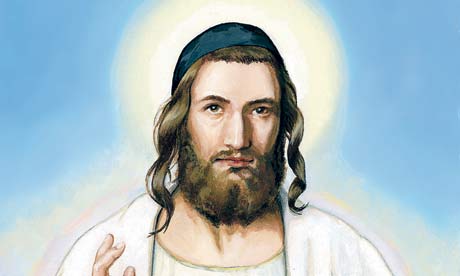 The parts of the gospels that portray Jesus as an early first-century Galilean rustic may be true. Judaism, being the most important aspect of his identity, would have elevated his life above the everyday humdrum struggle for survival. He would have been circumcised, and proud to be David’s descendant. He would have eaten only kosher food, and kept holy the Sabbath, which meant that every Saturday he didn’t do business. Jews were not permitted to cook, clean, entertain guests, feed animals, hunt, or perform a myriad of other minor chores on the Sabbath. He would probably have partaken in the Passover celebrations, which meant an annual trip to Jerusalem. He must have imagined the land of Israel was in part his, as God had given it to the Jewish people. He would have gone to a local synagogue to talk about the Torah and the prophets’ books with his fellow Jews. He could have considered himself one of God’s chosen, superior to gentiles. Many Jews did not eat with, marry or even mix with pagans if they could avoid it. Jesus may have told his disciples:
“Do not turn your steps to pagan territory, and do not enter any Samaritan town. Go rather to the lost sheep of Israel” (Matt. 10:6, NJB,) and
“I was sent only to the lost sheep of the House of Israel” (Matt. 15:24, NJB.)
There is no doubt Jesus was a Jew; never a Christian.
He would have been very familiar with the predictions of the prophets. Like many Jews of his time, he would have had some grandiose delusions, such as that Jews were the world’s superior people, specially favored by God and destined to show pagans the proper way to live. He imagined he was the Messiah, a person predicted in scripture whose mission was to establish social and economic equity on earth. It is likely he was convinced his God was intending to intervene in the affairs of men to initiate the kingdom of God. None of these fantasies ever came to fruition.
As he grew up, he would have seen his fellow Galileans violently oppressed and impoverished by the Romans. He had a close relationship with his cousin John, who created a grassroots anti-Roman movement, which he joined. Herod Antipas had John murdered because he was a threat to the political stability of Galilee. Jesus was brave enough to take over the leadership, and he worked hard to rally common Jews to his cause, although his less militant countrymen eschewed joining his ranks.

His attempt to overthrow the Romans looked promising because of the enthusiasm with which he was sometimes received, yet he had no military experience or intelligence, and no cachet of weapons, so it is not surprising that he fell flat. He had talked the talk but could not walk the walk. The Romans captured, scourged, and crucified him, a punishment reserved for rebellious rascals who threatened Roman rule.
The real Jesus did not achieve much. As he was dying in agony on a cross, he would have wondered why his God had not helped him, and he must have figured he was a failure. Memories of other Jews crucified by the Romans may have flashed through his mind. His goal had been to bring forth a glorious Israel, yet he became the latest inclusion to a long list of dead messiahs. Before he took his last breath, it may have dawned on him that the Romans might never be defeated.

It is ironic that the Romans, the very people Jesus despised, adopted him as their hero some three centuries after they killed him, and then blamed his own people, the Jews, for his death.
I do feel some respect for Jesus because he had a hard life, and stood up for what he believed in. He tried hard to make a difference for his Jewish compatriots. Many decades later, the Gospels would falsely portray him as a person who praised the meek, yet he was a proud man who refused to accept poverty and oppression.
 There have been over eighty thousand books written about Jesus in the last hundred years, so this assessment of his life is one of many. It fits well, I believe, with what we do know about the place and time in which he is said to have existed. I admit it does not lie well with everything he allegedly said. John’s gospel has Jesus saying
“… My kingdom is not of this world: if my kingdom were of this world, then would my servants fight, that I should not be delivered to the Jews: but now is my kingdom not from hence.” (John 18:36 KJB.) Matthew has Jesus say
“Blessed are the peacemakers: for they shall be called the children of God.” (Mattthew 5:9 KJB.) I hope the reader appreciates how unhistorical and silly quotes such as these are. As a consequence, “Jesus” is inconsistent. The honest historian must at some point have an educated guess as to what may be fact and what is fiction, and I think lines like these are fictional.
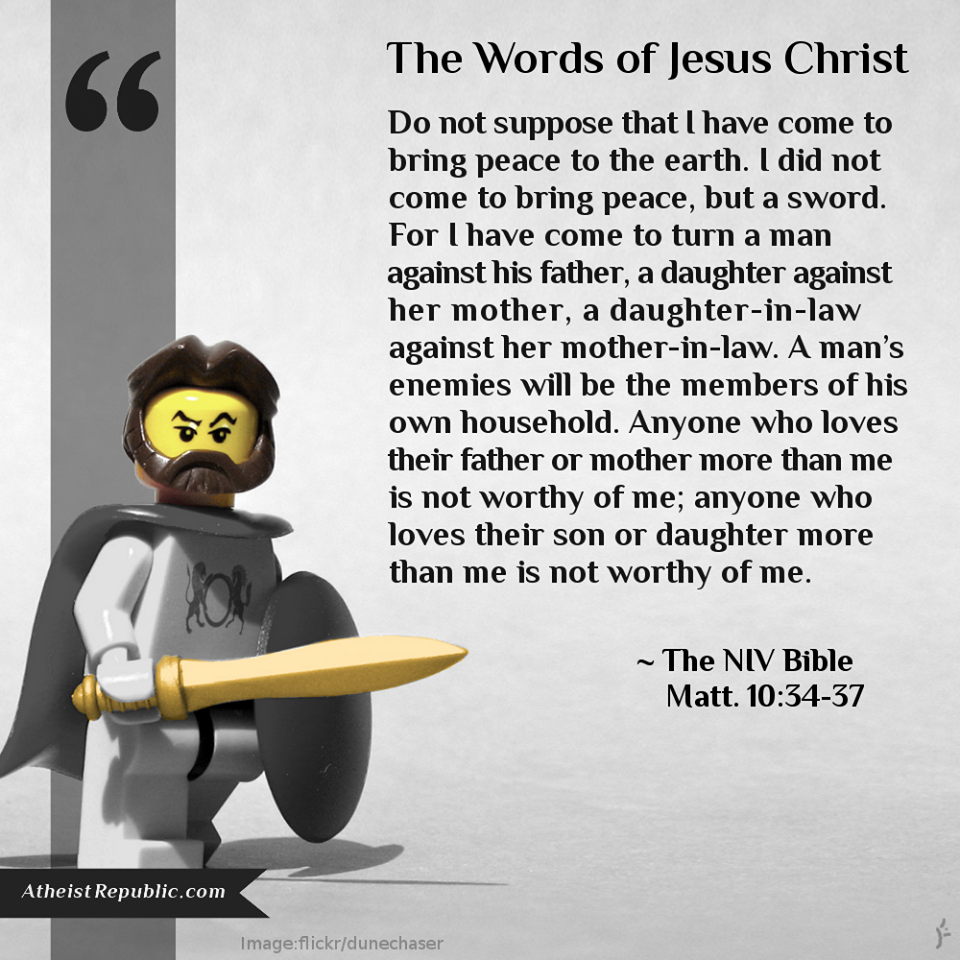
No one knows the whole truth about what happened two thousand years ago. Yet surely my analysis makes much more sense than the traditional tale. It is realistic, logical and plausible. One does not need to have spent a lifetime studying the Bible or Judaism to realize it rings true. One has to either be a diehard Christian, or deliberately dishonest, to reject outright the account I have just given about Jesus.
Jesus of the Gospels is a Concocted Myth!
“Christians at all levels of intelligence and capacity are being denied access to vital information concerning their religion, and this curtailment of information helps breed either an attitude of ill-founded complacency, or one of smug self-certainty. Living in a kind of metaphysical dream, the custodians of ‘old fashioned’ Christianity stumble from one futile explanation of New Testament events to another. Jesus was sinless; Jesus was sexless; Jesus was all-knowing; Jesus is the Savior of the whole World; Jesus is God. Such sentiments slip easily from the lips when the mind has been overtaken by spiritual vertigo due to intellectual undernourishment.”
(Douglas Lockhart)
As Lockhart eloquently states, the Jesus of theology has replaced the Jesus of history. One has to winnow out the substance from the gloss, and ignore the gloss.
The first known documents that can be considered “Christian” were Paul’s writings, written at least fifteen plus years after Jesus died. Those documents defined Christianity, yet they were unknown to Jesus. Many of the basic beliefs of Judaism and Christianity are mutually exclusive. Christianity was a brand new religion hoping to appeal to mainly gentiles, and it claimed that the celibate Yahweh somehow had a son who was his equal. It also attempted to undermine the importance of the Jewish Law. It’s impossible to imagine that Jesus, a Galilean peasant, would try to invent a new doctrine. He no doubt discussed the substance of scripture, but wouldn’t have reinvented his basic beliefs.
His primary agenda was not to preach philosophy. A wandering teacher’s pithy observations on life would not have wooed crowds of thousands, nor would they have attracted the attention of the Romans, Herod, Sadducees, or Pharisees. People were too poor and the times too hard for that. Jesus was popular because he was a potential Messiah, a charismatic young zealot supposedly from David’s bloodline who was crazy brave enough to stand up to the Romans.
 Churches have misrepresented his message to make it personal rather than social, for Gentiles rather than Jews, and spiritual rather than political. The real Jesus has been buried beneath a mountain of creeds, jargon and mysteries concocted many years after he died. Christianity only emerged decades after his death – and became a religion primarily for Gentiles. It used a story about him to create something new that was not Jewish and that he would not have understood or approved of.
Jesus was not the meek lamb of God. He did not think he was God’s son, and nor did any of his original disciples. He did not suppose he was the savior of the world. To sacrifice himself for Gentile sinners would not have crossed his mind. He never once thought he was the central figure of a new religious cult. He did not rise from the dead. The imaginative Paul of Tarsus put forward all these fictions. Jesus never met Paul, yet if he had would have despised him for promoting pagan propaganda.
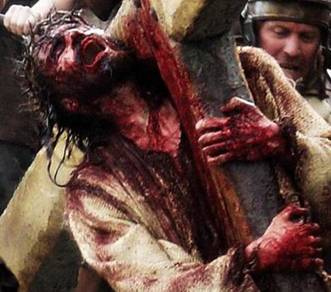 The Romans actually crucified Jesus twice; once in real life, and then again by lying about his legacy in the Gospels and at the council of Nicaea. Why they repeated the act is discussed in my book.
It can be argued that to keep Jesus trapped in the Christian paradigm is disrespectful to the real man, and, more importantly, confuses many people with a web of complex falsehoods.
Christians may ask whether it makes any sense to:
– Praise a Jewish peasant who would never have presumed he was a god?
– Believe that Jesus loved Gentiles, the very people who humiliated, tortured, and executed him?
– Decide that a dead Jesus can somehow control the state of the world or an individual’s destiny?
Many commentators over the last couple of centuries have reached some of the same conclusions. Most of them have not had “anti-Christian” agendas; they were honest historians who believed in the importance of the truth.