

“God” in Context
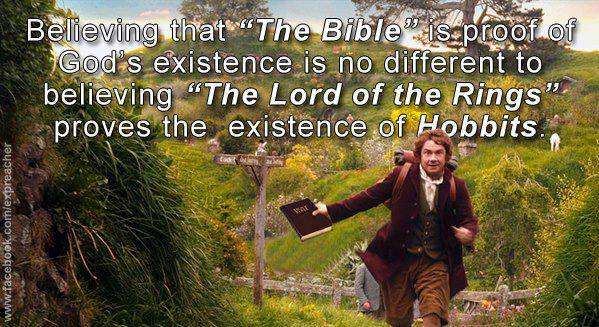
 The Bible, the basis of Christian belief, has been debunked in my book.
The Biblical Yahweh does not exist; “he” was only the product of a small group of ancient men’s attempts to control others, and the real Jesus, if he ever existed, was not a Christian God, but a belligerent Jew.
There are some other angles that strongly suggest that God is fictional. I am referring to the spatial, numerical, and temporal contexts.
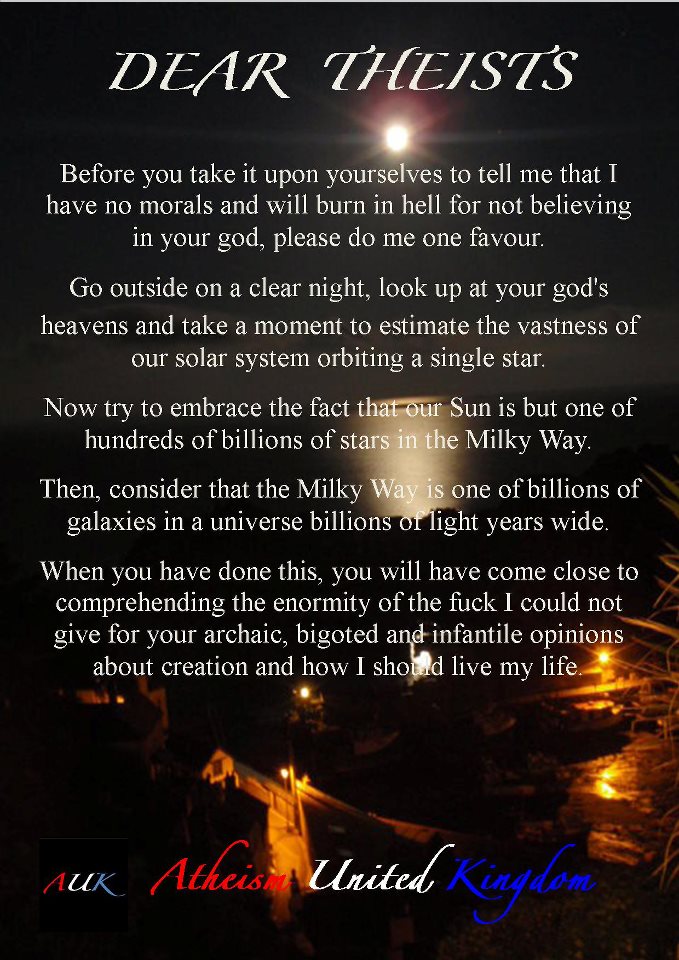
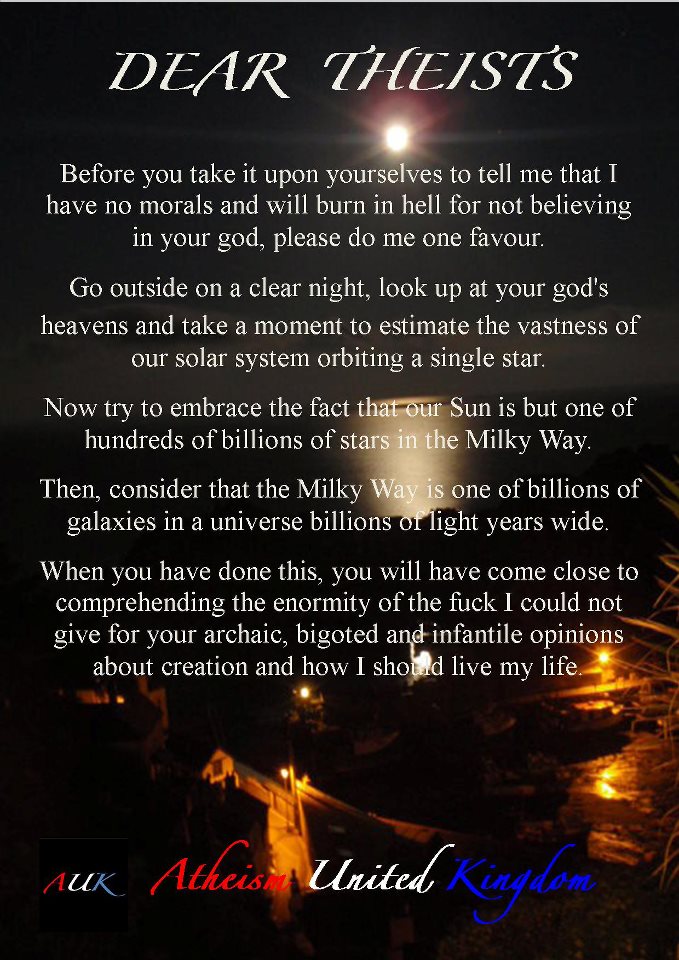
Ancient Palestine, the place where belief in Yahweh was born, was only a smallish spot on the earth’s surface, an area roughly the size of Wales. The earth is only a tiny dot in an immense, infinitely large universe. When we gaze into the night sky, some of the stars in the sky are ten billion light years old, whereas God’s birthplace is not a blink of an eye away. The enormity of the difference in size between the land where the supposed creator of the universe was first imagined, and the actual size of the universe, “his” supposed creation, is almost incomprehensible.
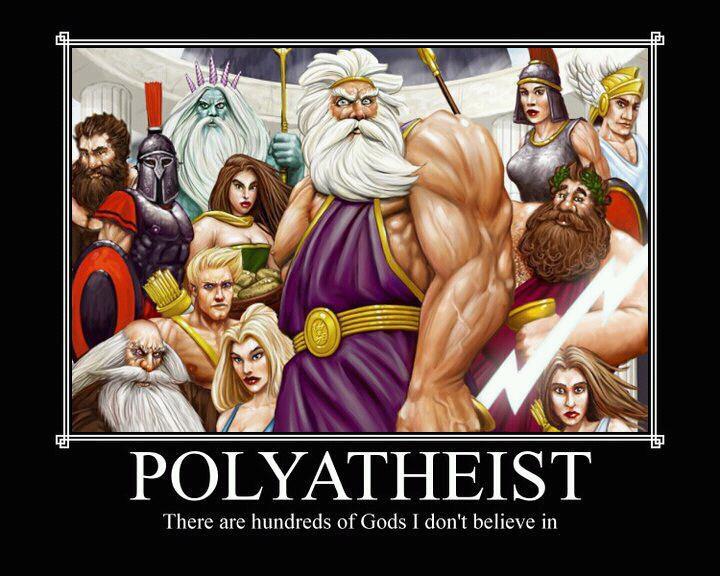
The population of Palestine in King David’s day, c. 1000 BCE, was probably not more than a hundred thousand. There were perhaps fifty million people in the world. So only about 0.2 percent of the world’s people had even heard of Yahweh, and most of them thought of him as just one of many gods. Hundreds of other gods featured in the folklore of earth’s dwellers, yet today we only hear of them in the myths and legends of ancient peoples. Yahweh, a figment of primitive Jews’ imaginations, is not one iota more real than all the other gods.
“Yahweh” was invented about three thousand years ago, which is only one and a half millionth of the time our earth has been in existence (4 ½ billion years.)
It is farcical to claim that the ancient Jews, a paltry band of primitive people, who have only recently appeared on a tiny part of our puny earth, had a god who created everything in the entire cosmos. Anyone who imagines this is fact has an inflated opinion of the Jews,’ and man’s, and the earth’s, importance in the universe.[1] [2]
Gods have existed ever since people wanted their questions answered. Where does rain come from? Rain was important for drinking water and the growing of crops. Sometimes it does not rain for weeks. Why? Man did not have the scientific skills, equipment, or knowledge to answer such questions, but needed to know. Man invented the rain god. When there was no rain, men tried to appease this god. They prayed, sang, beat drums, danced, and even made sacrifices to the rain god. When rain eventually came, as it inevitably does, men thanked the rain god for answering their prayers.
Most ancient gods were originally the products of puzzled people trying to comprehend and have some control over things they did not understand. Gods made sense to people who did not know any better.

The rain god is only one example. When ancient civilizations needed a helping hand, whether it was to control the elements, or to help fight each other, or to explain something, they imagined a god to fill in the gap. These gods were invisible and lived in secret places. Yahweh was originally the “god of the armies,” the “lord of hosts,” who would help the Jews in battle. Nowadays we do not need a worthless rain god because we know how weather systems work, and we should not want an ineffectual war god either, because we have armies and weapons.
If people had been left to reason things out, all gods would have disappeared – replaced at first by common sense and intuition, and then by scientific explanations.
Unfortunately, a largish part of humanity was not left alone to follow this logical development. Certain groups of greedy people saw a business opportunity. They called themselves priests, prophets, rabbis, or imams. They wrote and promoted holy books, made out they were wise, and claimed that they understood God’s instructions. They were setting up businesses to exploit the average punter. They used a whole arsenal of invented untrue nonsense to control and fleece gullible people.

 These men, in all their various guises, are still in business today. Many of them are too loud. Most of them do not have real jobs that contribute goods or services to society. They cause an awful lot of irrational thinking, time wasting, prejudice, terrorism and bad feeling.[3]
The world would be a better, happier, and safer place without them.

Religion is a relic from our primitive past still promoted by raconteurs to give themselves power and an income.
These men know that one reason they can sell religion is that most people like to dream. A heavenly afterlife means there is something to look forward to, a fantastic step up from the injustices, work, worries and ordinariness of life on earth.

Faith in God is like a lottery ticket; it buys people the belief that one day things might get better because they have struggled damned hard and deserve a lucky break. Yet for all the millions of ordinary people having a punt on Christianity, there are no winners. There is not the slightest bit of evidence that God or heaven exists. They are just ideas invented by businessmen to exploit the public.
The truth matters. Faith, which ignores reason, is a travesty against our intellects. It is anxiety about the unknown masquerading as certainty. To admit that there is no god is to face up to the facts. We do not have answers to all of life’s questions. As the decades go by, we, the human family, will know more; not because we have faith, but because our scientists have discovered more truths.
Heaven, the unproven promise of a never-ending theme park in the sky, is an insult to our intelligence. Even the best party in the universe becomes a prison if there are no options to leave.
Some people claim that to hope for heaven is harmless, but the idea of heaven degrades the one and only life we will ever have – the one we are living right now.
Who remembers what it was like to be a young child? I do. Picture yourself running around a playground. We did not waste time worrying about God, heaven or why we are here. We were too busy exploring every nook and cranny of our new world, we were not inhibited by the memory of bad experiences, we expressed ourselves openly, and we were not afraid of being judged. We embraced life with wide-open arms, did not deny our emotions, and were not cynical or opinionated. We lived in the present, and we were usually thoroughly happy as a result.
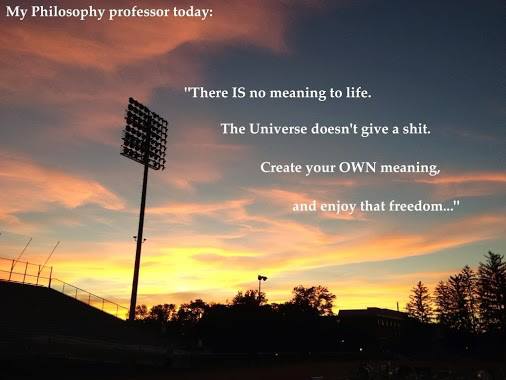
Perhaps people should be more child like by embracing what is real in the here and now. When people do that, life usually has more meaning: the taste of food, a glass of good wine, a friend’s smile, a string quartet, or a Miles Davis ballad can be enjoyed because they are real and temporary. To experience the pleasure of the present, and stop worrying about consequences, can be like coming out of a trance. It is about being receptive to the full gamut of the human experience, and that helps people feel more alive. It also makes us more likeable and loveable, and less selfish.
The promise of paradise can rob people of the pleasure of living in the present. The ancient Greek philosopher Epicurus knew that life should be all about the journey, not an imaginary destination, which is why we do not need gods, beliefs, and creeds; we need to let them go![4]
There is nothing supernatural after death. “Heaven” is what we create on earth, through love. Now that is a beautiful, and real, concept!
“Hell” is also here. It is what happens when we hate our fellow man.
The fact that there is no god and no heaven will not bother us in the slightest after death, because we will not be conscious! There is no point lamenting their non-existence. Mark Twain wrote:
“I do not fear death. I had been dead for billions and billions of years before I was born, and had not suffered the slightest inconvenience from it.”
Those who believe in God and heaven are egotistical and gullible enough to place themselves at the centre of an enormous and mysterious universe. To do that is not only selfish, it is also rather pathetic.
[1] http://www.youtube.com/watch?v=JXEiKPxCSdA
[2] http://www.youtube.com/watch?feature=player_embedded&v=e8P1Y1a7-L4 – !
[3] http://www.youtube.com/watch?v=ODetOE6cbbc
[4] http://plato.stanford.edu/entries/epicurus/

http://www.youtube.com/watch?v=SEVntZ8a-xk&feature=related).





References:
Dalai Lama., Cutler, H.1998 “The Art Of Happiness” . Hodder and Stoughton. London
Dawkins, R. 2006 “The God Delusion” London Transworld Publishers.
Winell, MarlenePh.D. “LEAVING THE FOLD: A Guide for Former Fundamentalists and Others Leaving their Religion, ©1994, 2006
http://www.youtube.com/watch?v=WwG9pDNSAXA&feature=related
http://www.youtube.com/watch?v=4Oh947g4zvg&feature=related
http://www.youtube.com/watch?v=TlxpQlNLKeM